

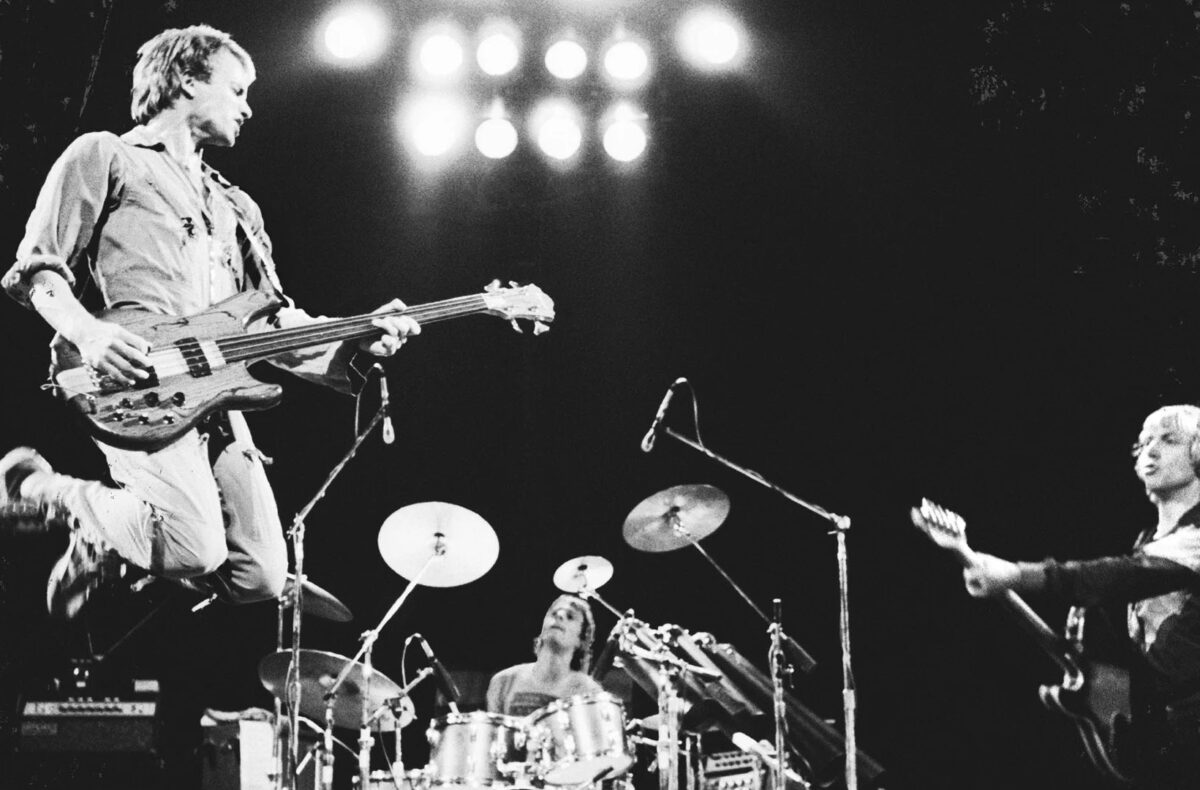
Every Buck You Take: when riffs are worth millions
The ongoing legal dispute between former members of The Police over “Every Breath You Take” illustrates the gap between artistic creation and copyright law. Released in 1983 and credited solely to Sting, the song remains a massive hit, generating enormous revenue: Sting reportedly earns between £550,000 and £740,000 per year, with nearly 3 billion streams on Spotify.
Yet, Andy Summers, the band’s guitarist, said the song “was going in the trash until I played on it” — and he invented a riff that became iconic and one of the most recognizable guitar lines in rock history.
Legally, a song is often defined as chords, vocal melody, and lyrics. But is that enough to explain why a track becomes a global hit, generating royalties through public performance rights or music licensing for ads, films, or TV?
The debate over the thin line between arrangement and co-creation isn’t limited to The Police. Music history is full of uncredited but decisive contributions:
- Eddie Van Halen recorded the legendary guitar solo for Michael Jackson’s “Beat It” without credit or compensation, even suggesting it be placed over the verse rather than the chorus.
- Clare Torry improvised the stunning vocals on Pink Floyd’s “The Great Gig in the Sky”, paid just £30 in 1973; only after a 2005 lawsuit was she recognized as co-composer.
It’s worth noting that these two tracks come from “Thriller” and “The Dark Side of the Moon” — two of the ten best-selling albums of all time.
In theory, copyright law recognizes as co-author anyone making an original contribution. In practice, too often, record labels and official songwriters lock down credits, leaving contributors like producers and arrangers in the shadows, with session fees or neighboring rights. Yet some contributions are inseparable from the work: Summers’s riff, Van Halen’s solo, Torry’s voice — without them, these songs would likely have had a different fate.
These musical contributions are far from mere “ornaments.” They transform songs into timeless classics and create instantly recognizable elements that evoke emotion. They directly impact a catalog’s value and music licensing opportunities — for example, Mike and Eleven dance to “Every Breath You Take” at the senior prom scene of Netflix’s “Stranger Things” (S2, E9), which won “Best Musical Moment” at the 2018 MTV Movie & TV Awards.
The Police case is one of many disputes over music rights, but it shows a truth: a song is rarely the work of a single person. It is often the product of a collective process, where a bass line, a choir, or a solo can transform an idea into a masterpiece. While copyright law struggles to fully recognize them, music supervision, which values the emotional and cultural power of songs, reminds us every day that these “invisible” contributions are priceless.